

Restoration at Prescott Preserve: The First Nine Months (Phase 1) – We Are Growing, Literally!
May 1, 2026
The first quarter of 2026 was one of the most active and eventful periods since restoration began at Prescott Preserve. From expanding our native plant efforts to navigating real-world challenges, the team accomplished a great deal between January and March 2026. Here is a look at what happened and where things stand heading into summer.
Invasive Species Management
Following rainy early-winter months, Prescott Preserve experienced a significant outbreak of London Rocket mustard (Sisymbrium irio), an invasive plant that spreads rapidly after wet conditions and competes aggressively with native vegetation. OLT responded using a coordinated combination of mechanical mowing, hand-tool work by staff and volunteers, and herbicide treatment in some areas. The goal was to break the mustard’s cycle before the mustard entered its seeding stage — preventing an expansion of the invasive seed bank. In addition, OLT staff and volunteers carefully flagged native annuals and perennials before mowing began, protecting sensitive native vegetation from accidental damage, and expanding the seed banks of species we want at the Preserve. Invasive species management is ongoing and will continue as conditions require. On a positive side, past year efforts have worked, and we have seen little tumbleweed growth this year.
The Oasis Fire – and a Remarkable Recovery
On February 1, 2026, a fire affected the Oasis area of Prescott Preserve, resulting in damage to approximately 100 palm trees. The OLT team, along with Palm Springs Fire Department, Police Department, and Code Compliance, responded immediately. OLT staff and 75 volunteers worked tirelessly over the following days to clean up the affected areas, and all trails were fully reopened to the public by February 6 – just five days after the fire.
The response was recognized publicly at a Palm Springs City Council meeting on February 11, where City staff specifically acknowledged the work of OLT staff and volunteers, stating that their efforts enabled a full trail reopening within days.
We are thrilled to share that as of today, the Oasis has shown a truly remarkable ecological recovery. All affected palm trees have produced significant new green growth, with full palm fronds now visible across the entire area.
The water quality has also improved, thanks to months of skimming by volunteers to remove debris and a bacteria treatment by our pond contractors. We saw a substantial reduction of fish in the bridge pond after the fire, while the wildlife pond remained active with fish (the two are connected by a tunnel). It took time, but thankfully the fish have now repopulated in the burn area water (which means more birds are returning to eat the fish).
Thank you to the Palm Springs Fire Department for their amazing response to the fire.
The desert is resilient — and so is Prescott Preserve.
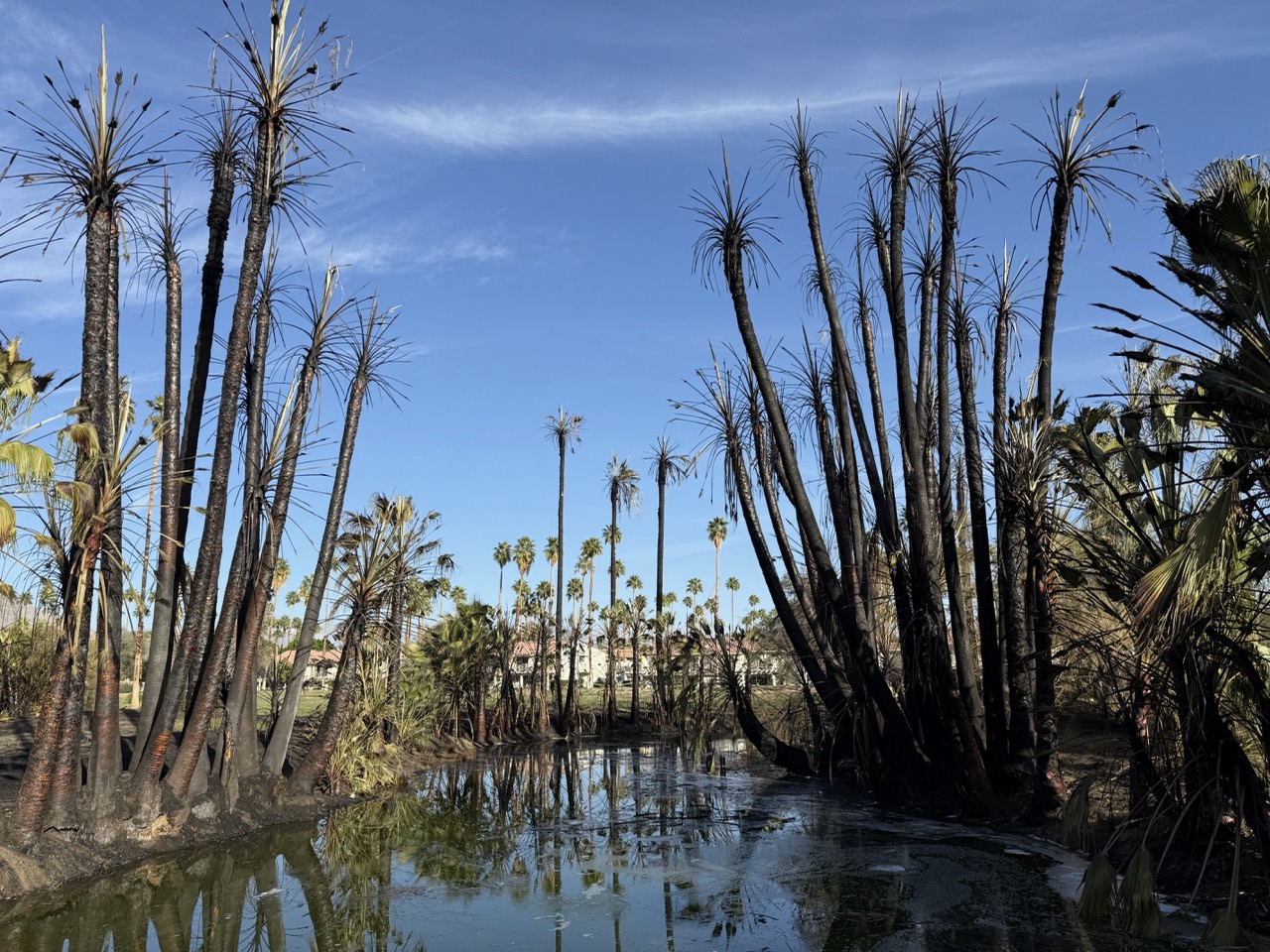
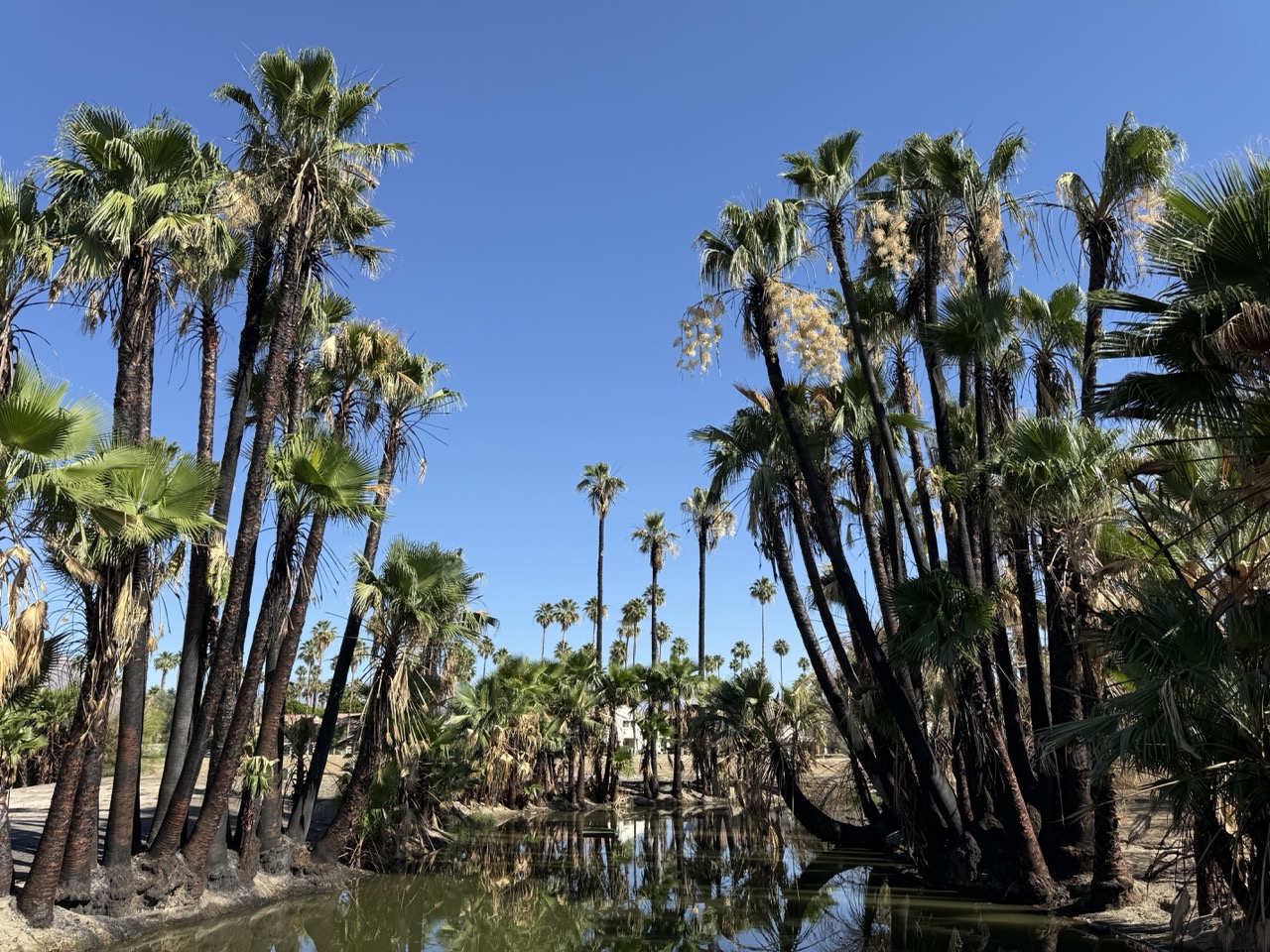
LEFT: Prescott Preserve, February 2, 2026 | RIGHT: Prescott Preserve, May 2, 2026
Code Compliance: Creating Defensible Space
Prescott Preserve continues to work weekly with City of Palm Springs Code Compliance to assure that the Preserve meets all city codes, including the fire codes that create defensible spaces near neighboring structures. These efforts include focusing on the perimeter of the Preserve; clearing dry brush, fallen palm fronds and branches, and keeping ground weeds and leaves at minimal levels. Anyone who visits the Preserve in the morning sees our staff and volunteers out there almost every day. Defensible space was already created before the recent fire, which helped assure that the fire department was able to confidently manage and extinguish the fire without major threat to neighboring structures.
Growing Our Own: The Nursery to Nature Pathway
One of the most exciting stories of this quarter — and one we are incredibly proud of — is how OLT and its partners are growing the plants that will one day restore Prescott Preserve, right here in the Coachella Valley.
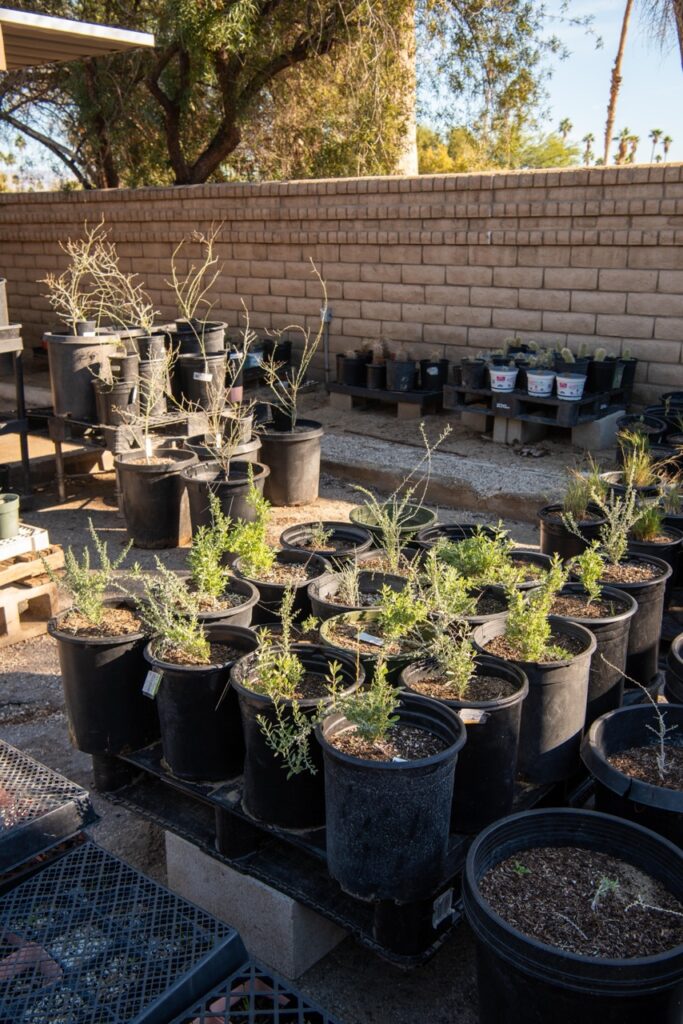
Rather than purchasing plants from distant commercial nurseries, OLT has built a living, locally rooted Nursery to Nature Pathway in partnership with the Prescott Preserve Native Plant Nursery, Mojave Desert Land Trust (MDLT), and DesertStrawHouse Nursery. Together, we are currently growing over 6,350 native plants from seeds and cuttings collected right here in our own backyard — ensuring that every plant going into Prescott Preserve is locally sourced and genetically adapted to our specific desert environment.
This matters more than it might seem. Locally collected seed means locally adapted plants — species that have evolved to survive our particular heat, our soils, and our seasonal rhythms. They are more likely to thrive, less likely to fail, and more ecologically meaningful than plants sourced from elsewhere.
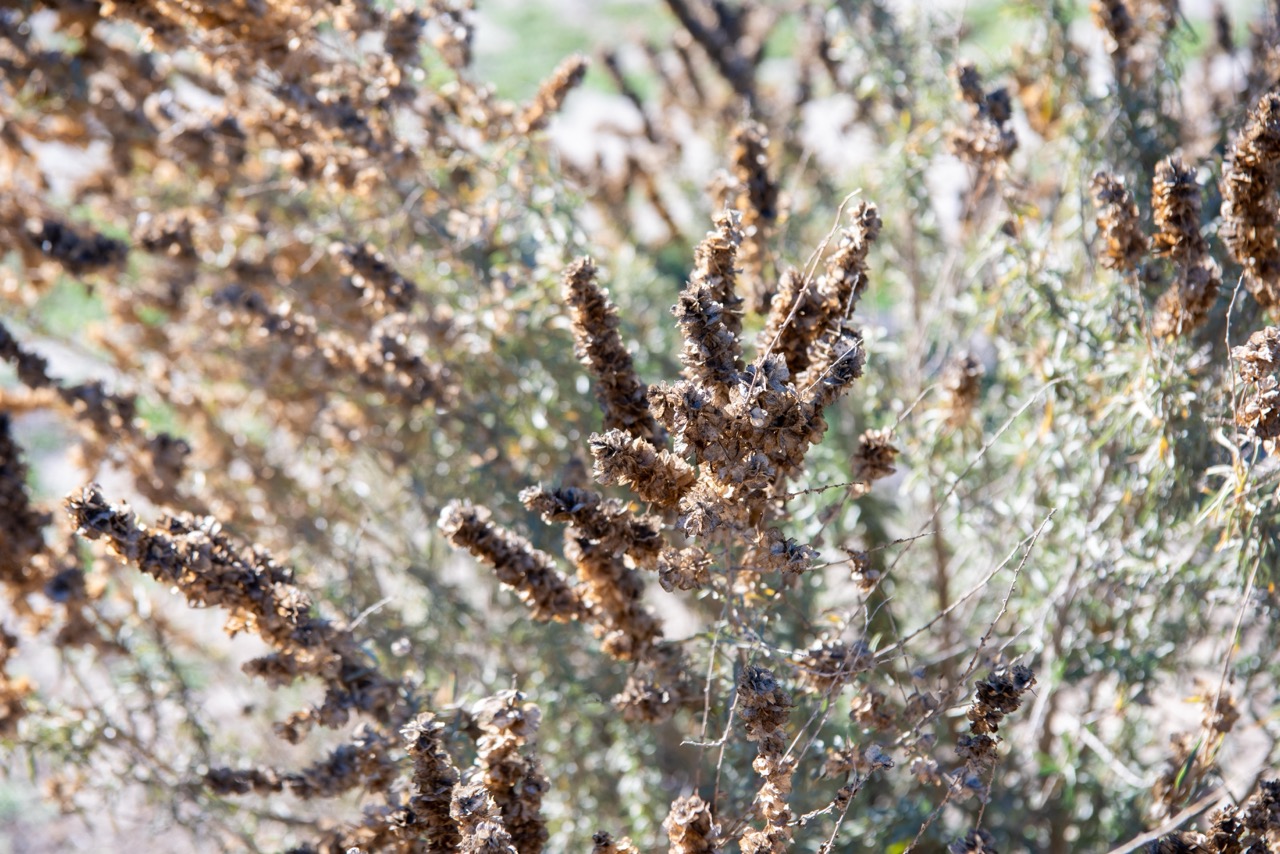
Throughout February and March, Jose Mendoza led OLT staff and volunteers — including members of the Riverside County Master Gardeners, the San Gorgonio Sierra Club, and Blue Zones Moai cohorts — into the field to ethically harvest wild seed and cuttings from locally adapted native species. Our Riverside County Master Gardeners are also a consistent weekly presence at the nursery every Friday, performing essential tasks including pest mitigation, watering, and seed processing. This effort yielded over 1,000 Desert Lavender (Condea emoryi) cuttings, delivered directly to MDLT to support the grow-out program.
All of these plants are being grown and carefully tended now so they will be ready for installation in fall/winter 2026, when cooler temperatures and seasonal moisture provide the best conditions for long-term survival in the desert.